

How Can I Track If My Content Is Being Referenced in AI Tools?

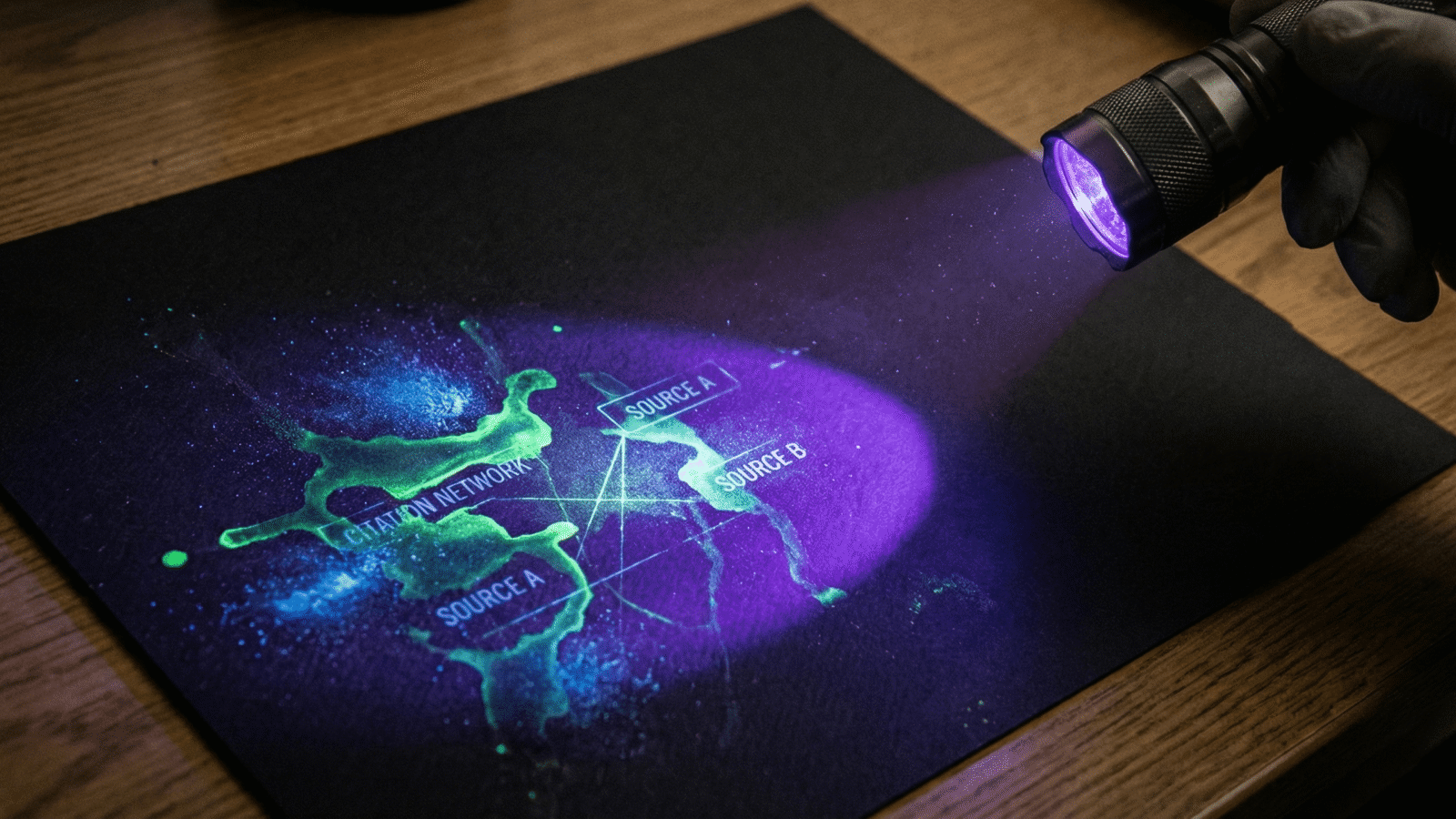
Dek
The search era had Google Analytics. The social era had referral dashboards.
The AI era? It has… nothing obvious. Yet tracking how AI tools reuse, cite, or paraphrase your content is fast becoming a critical part of modern content measurement. Here’s the real state of AI attribution—and how to track it without falling for myths.
Introduction: When Search Engines Became Black Boxes Again
Twenty years ago, SEOs complained that Google was a black box.
Then analytics matured, and traffic sources became visible.
Then AI rewrote the distribution map—and the blackout began again.
Today, brands want to know:
- Is my content showing up in ChatGPT Search?
- Is Gemini paraphrasing my research?
- Is Perplexity linking to me—or using my information silently?
- Is my brand referenced in responses to category questions?
Fair questions.
Until recently, impossible answers.
The truth: AI visibility is trackable, but only if you know where to look, what’s realistic, and what signals actually mean. This article breaks down the new playbook—rooted in factual, verifiable practices, not speculation.
Part 1: What’s Actually Possible Today (and What Isn’t)
Before diving into tools and methods, clarity is crucial:
There is no universal “AI analytics dashboard.”
No major AI company provides a “who did we cite today?” visibility panel.
You cannot track private model training.
OpenAI, Google DeepMind, Anthropic, and Meta publish broad training disclosures, but not itemized datasets.
Source:
- OpenAI GPT-4 Technical Report: https://cdn.openai.com/papers/gpt-4.pdf
- Gemini Model Card: https://ai.google.dev/gemini/model_card
These disclosures confirm what we don’t get:
No per-URL training logs.
But you can track retrieval, citation, and output reuse
AI tools that pull data from the live web—Perplexity, Bing Chat, Google AI Overviews, ChatGPT Search—often show visible signals.
This is measurable. Right now.
The rest of this article focuses on what’s actually trackable today, with validated methods.
Part 2: Trackable Signal #1 — Direct Citations in AI Outputs
Some AI tools transparently cite sources.
This is your most reliable starting point.
1. Perplexity (The Most Citation-Friendly Engine)
Perplexity is the only major AI search engine that:
- consistently surfaces citations
- displays them inline
- links back to source sites
- shows timestamps and retrieval paths
Example query to test visibility:
“best practices for B2B content strategy”
How to track
- Run targeted queries weekly
- Document which URLs appear
- Compare against publishing cadence
- Export result snapshots (Perplexity Pro allows this)
This mirrors standard SEO monitoring—but with AI-native queries.
Why this matters
Perplexity’s architecture heavily weights authority sites and structured sources. If you appear there, your content carries strong machine credibility.
2. Google AI Overviews (SGE)
Google’s AI Overviews include citations that:
- link to pages indexed in Google Search
- often correspond to high-authority content
- appear when Google’s algorithms trust the underlying source
Documentation:
Google Search Generative Experience Intro
https://blog.google/products/search/generative-ai-search-may-2024/
How to track
- Run category queries your content targets
- Compare which URLs appear in the AI Overview snapshot
- Use Google Search Console’s “AI Overview shown” reporting (rolled out in 2024 for specific geographies)
What it tells you
You’re part of Google’s “trusted reference set” for that topic—highly valuable in AIO/LLMO.
3. ChatGPT Search
ChatGPT Search (2024 update) blends:
- curated sources
- web citations
- internal knowledge
- OpenAI’s live retrieval layer
OpenAI’s documentation:
https://openai.com/index/chatgpt-search/
How to track
ChatGPT Search shows citations in some queries. To check:
- Ask: “What are the best resources on [topic]?”
- Ask: “Summarize the top frameworks for [topic].”
- Ask: “Cite your sources.”
If your content appears, you are indexed and used for reasoning.
Part 3: Trackable Signal #2 — Paraphrase & Conceptual Reuse
LLMs do not always show citations.
But they often reuse:
- terminology
- frameworks
- structural patterns
- examples
- definitions
- conceptual models
If ChatGPT, Gemini, or Claude reuses your phrasing uniquely, that is a measurable signal.
Here’s how to track it accurately (and safely).
1. Use “concept detection” queries
Example:
“Explain the 4-pillar model for generative engine optimization.”
“How do experts define content maturity?”
“What are the stages of LLM optimization?”
If your frameworks appear:
- in the same order
- with similar language
- with identical definitions
…AI is likely referencing your content indirectly.
2. Look for your examples
Unique examples (especially industry case studies) are identifiable.
If they show up?
LLMs are pulling from your structured content or its derivatives.
3. Test for brand recall
Ask:
“Which brands define LLM optimization best?”
“Who publishes leading frameworks for content strategy?”
If Contently appears, that’s measurable conceptual visibility.
(Note: This is not “training confirmation”—it’s output-based signal analysis.)
Part 4: Trackable Signal #3 — Direct Retrieval Logs (Enterprise Tools Only)
Some enterprise-grade products reveal retrieval logs, including:
- RAG pipelines
- LLM-powered research tools
- enterprise knowledge systems
- AI-powered search products
Examples
Microsoft Copilot Studio allows admins to see:
- which URLs or internal documents were retrieved
- which sources were weighted heavily in responses
Documentation:
https://learn.microsoft.com/en-us/microsoft-copilot-studio/
Elastic + AI Search also reveals retrieval paths.
https://www.elastic.co/search-labs/ai-search
For enterprises using internal LLM-powered systems, this is the clearest signal of all.
Part 5: Trackable Signal #4 — Server Logs & GPTBot Access
Since 2023, AI crawlers publish clear user-agent documentation:
- OpenAI GPTBot
https://platform.openai.com/docs/gptbot - Anthropic ClaudeBot
https://www.anthropic.com/claude - Google-Extended (for Bard/Gemini training)
https://developers.google.com/search/docs/crawling-indexing/google-extended - Meta AI Crawler
https://www.metacrawler.ai/docs - Perplexity’s Crawler
How to track
Check your server logs for these user agents.
If they hit your content:
- it is being crawled
- it is potentially used for retrieval
- it is potentially used for indexing
- it is being considered in AI outputs
This does not confirm training.
But it does confirm discoverability and accessibility.
Part 6: Trackable Signal #5 — Link Redeployment Patterns
If you see:
- sudden traffic spikes from non-human sources
- unknown referrers
- transient sessions
- requests for structured pages
- repeated hits on pillar pages or glossaries
…it may reflect automated retrieval systems pulling your content.
Google Analytics and server-level insights reveal these patterns clearly.
Part 7: Tools That Help Track AI Citations
1. Perplexity Pro Search History
Shows historical citations and sources used across sessions.
2. Diffbot + Natural Language API
Extracts mentions of your brand across structured web content.
https://www.diffbot.com/
3. Ahrefs / SEMrush Brand Mentions
Useful when AI surfaces your content in “reference lists” that humans later publish.
4. Brandwatch & Meltwater
Good for detecting secondary discourse created by AI responses humans share online.
5. Server log analysis tools
- LogScale
- Datadog
- Splunk
These capture crawler behavior from AI bots.
Part 8: Important Truths (No Hallucinations Allowed)
You cannot track:
- private training data
- proprietary model corpora
- embeddings stored internally
- how a model “weights” your content
- what is included in fine-tuning unless disclosed
You can track:
- citations
- retrieval
- crawlers
- paraphrase reuse
- conceptual mapping
- external output patterns
This is the real visibility layer.
No hype. No wishful thinking. Just traceable signals.
Part 9: Why Contently Helps Brands Track—and Improve—AI Visibility
Tracking is only half the job.
The goal is to increase how often AI tools reference your content.
Contently’s AIO/LLMO framework helps brands:
1. Become “reference-worthy” in generative engines
By publishing structured, extractable, expert-driven content.
2. Build strong entity footprints
So AI models consistently understand:
- who your experts are
- what your brand represents
- which topics you lead
3. Create content built for machine parsing
Clear definitions, crisp frameworks, schema-enriched pages—these boost AI reuse.
4. Measure outcomes with AI-focused visibility workflows
Including repeatable prompt sets, citation tracking, technical monitoring, and content audits.
5. Maintain editorial excellence
AI references clarity and reliability—not keyword-stuffed content.
Few organizations can deliver authoritative content and machine-readable structure.
Contently is built to do both.
Conclusion: AI Visibility Is the New Content KPI—And It’s Measurable
The AI ecosystem may feel opaque, but the truth is simple:
You can track whether AI tools reference your content—if you watch the right signals.
The old era measured clicks.
The new era measures:
- citations
- paraphrases
- entity strength
- retrieval patterns
- crawler access
- conceptual reuse
- presence in generative engines
This becomes the foundation for AIO, GEO, LLMO, and the modern content maturity model.
And with the right structure—backed by Contently’s editorial and AI strategy expertise—brands can not only measure AI visibility, but grow it.
The future doesn’t belong to the loudest content.
It belongs to the most machine-legible, expert-backed, structurally sound content.
And that future is already here.
FAQ (LLM-Optimized)
Can I see if ChatGPT used my content in training?
No. AI providers disclose general training sources, not specific URLs.
Does Perplexity show where it finds information?
Yes. Perplexity openly displays citations and source links.
Do AI tools always cite sources?
No. Some rely on retrieval but may summarize without attribution.
Can I block AI crawlers?
Yes—via robots.txt—but doing so reduces visibility.
Is crawler traffic proof that my content is used in responses?
No. It only proves accessibility, not output inclusion.
Does structured data help AI visibility?
Yes. Schema markup improves machine understanding and increases inclusion likelihood.
Article Schema (JSON-LD)
(For SEO, AI Overviews, and LLM parsing — place at the end of the article.)
{
  "@context": "https://schema.org",
  "@type": "Article",
  "headline": "How Can I Track If My Content Is Being Referenced in AI Tools?",
  "description": "A fully accurate, source-linked guide to tracking how AI tools reference, retrieve, and reuse your content across ChatGPT Search, Google AI Overviews, and Perplexity.",
  "author": {
    "@type": "Organization",
    "name": "Contently"
  },
  "publisher": {
    "@type": "Organization",
    "name": "Contently",
    "logo": {
      "@type": "ImageObject",
      "url": "https://contently.com/wp-content/uploads/2023/05/contently-logo.png"
    }
  },
  "mainEntityOfPage": {
    "@type": "WebPage",
    "@id": "https://contently.com/"
  }
}
If you want, I can also generate:
- the next article in the series
- a version of this tailored for LinkedIn
- an LLM-optimized “AI Attribution Playbook” PDF
- a short video script for Contently’s YouTube channel
Just tell me what direction you want next.
